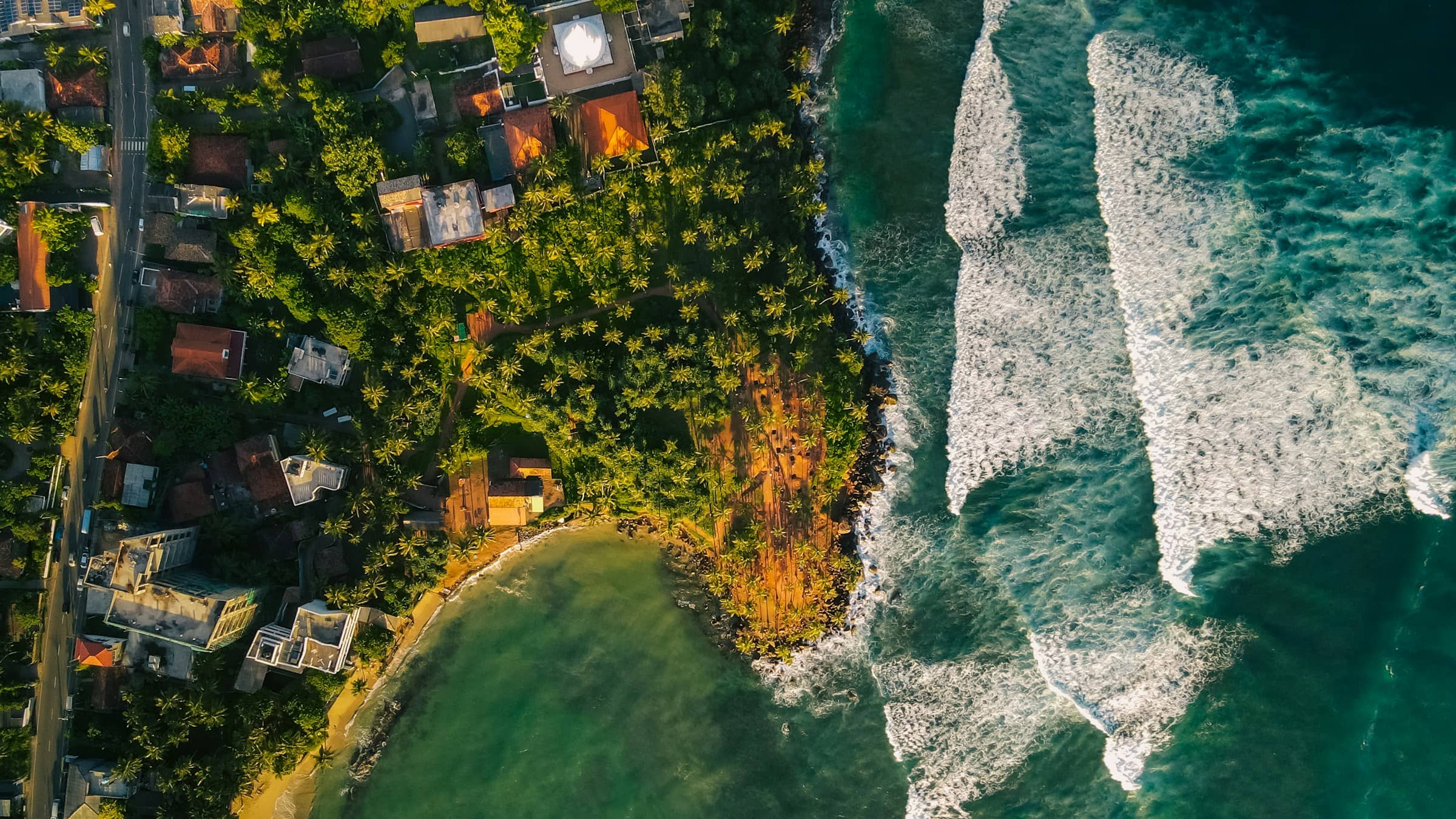
Destinations
Seven regions, seven seasons
Where you go depends on the month, not the mood.
- 7 regions
- 8 World Heritage Sites
- 65,610 km²
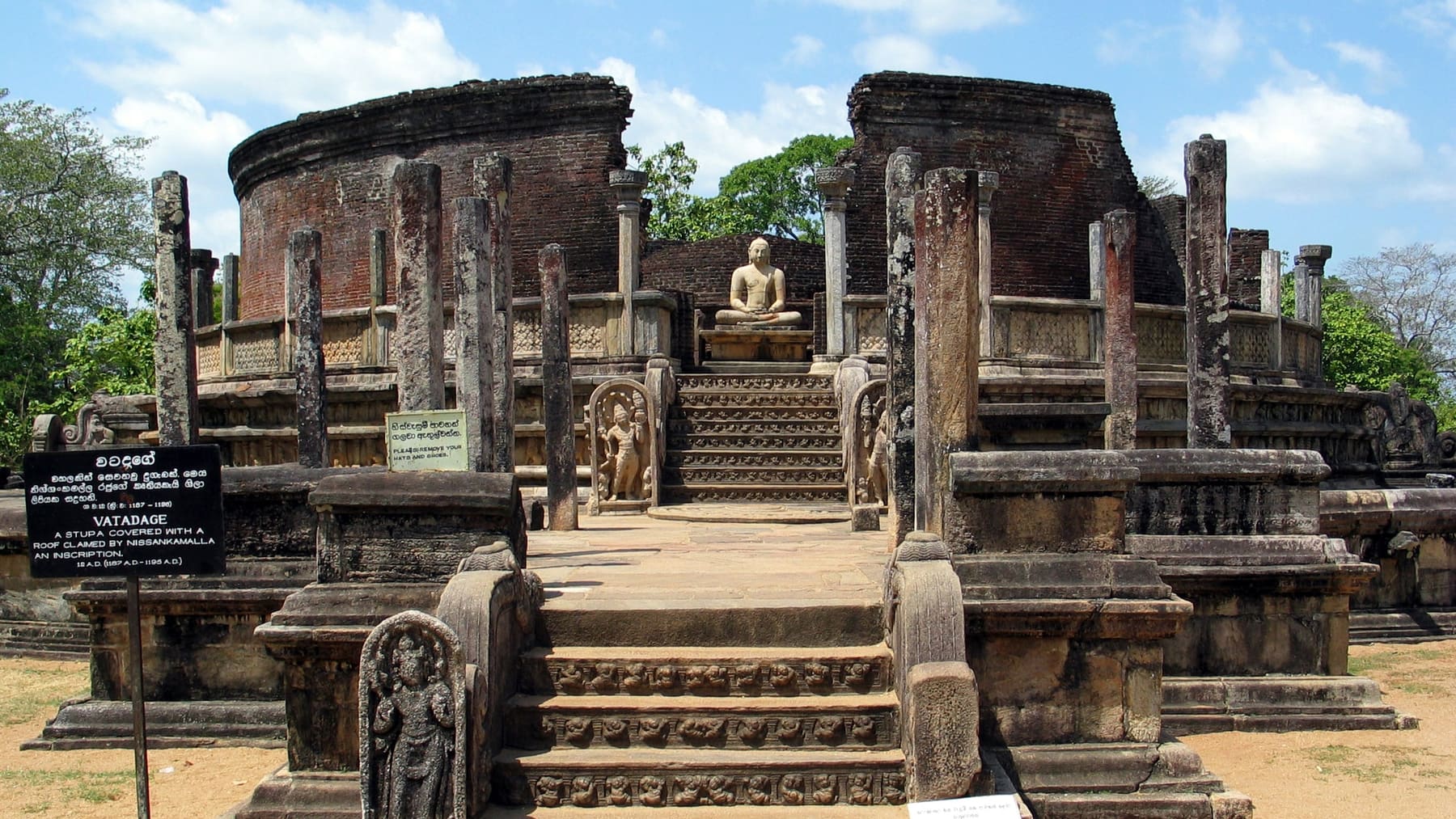
Dry zone, 3 to 4 hours north of Colombo
The Cultural Triangle
Anuradhapura, Polonnaruwa and Sigiriya, with Dambulla and Mihintale inside the same two hour radius. Four World Heritage Sites and about fifteen centuries of continuous capital between them.
Best months February to September
- Sigiriya
- Fifth century, roughly 200 metres of rock, about 1,200 steps
- Anuradhapura
- Capital from 377 BCE. Still an active pilgrimage site
- Polonnaruwa
- Twelfth century, compact, best crossed by bicycle
- Dambulla
- Five caves, about 150 Buddha images, painted ceilings
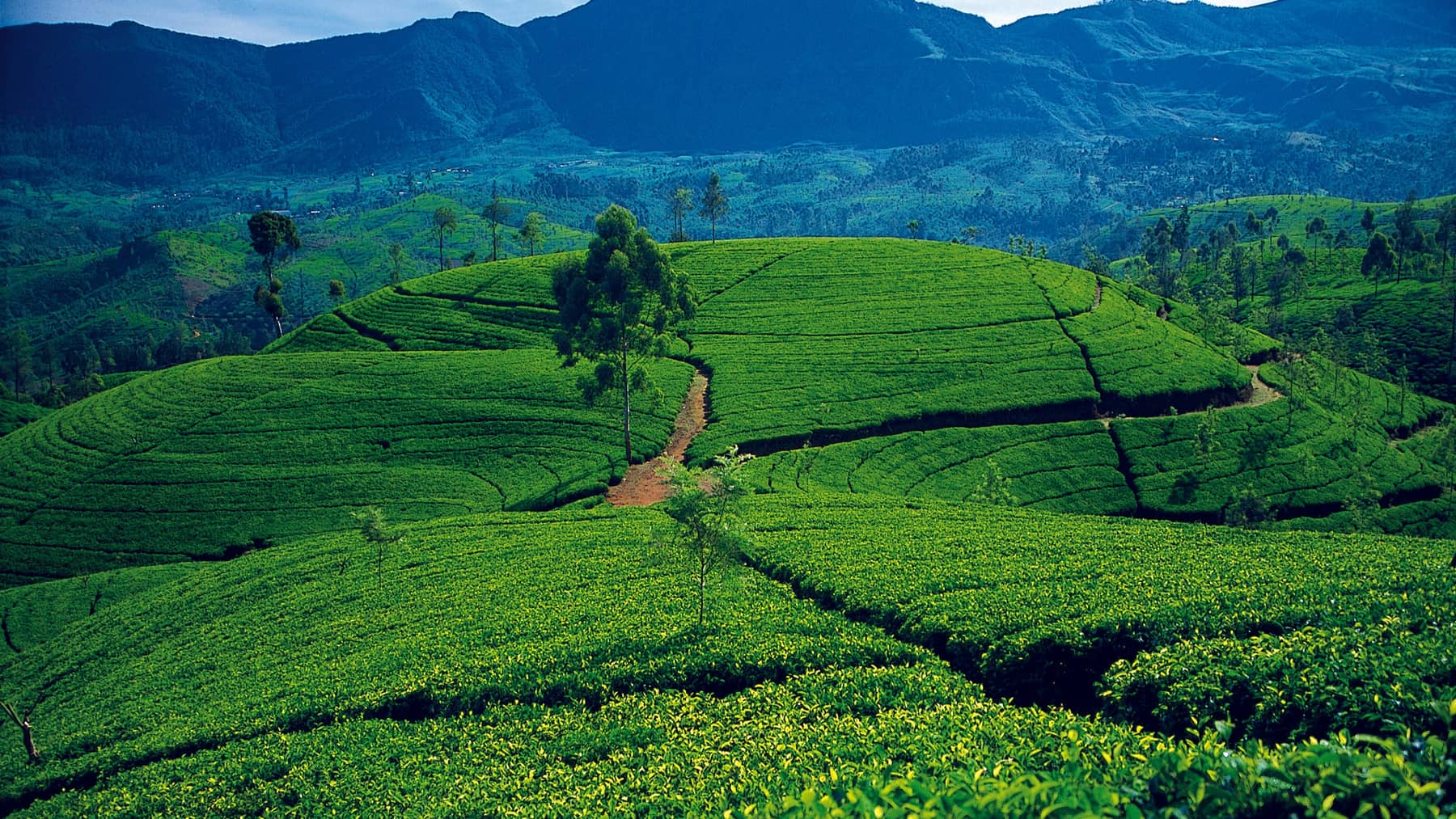
Centre of the island, 500 to 2,000 metres
Kandy and the hill country
Kandy was the last independent kingdom on the island and fell only in 1815. Above it the tea country runs to two thousand metres, cold at night, and is crossed by the railway the British built to bring the crop down.
Best months January to March, and December
- Kandy to Ella by rail
- About 6 h 45 through, or in two easier legs
- Nuwara Eliya
- 1,868 metres. Frost is possible in January
- Horton Plains
- World’s End is an 870 metre drop, clear only before 9 a.m.
- Tea since
- 1867, at Loolecondera near Kandy
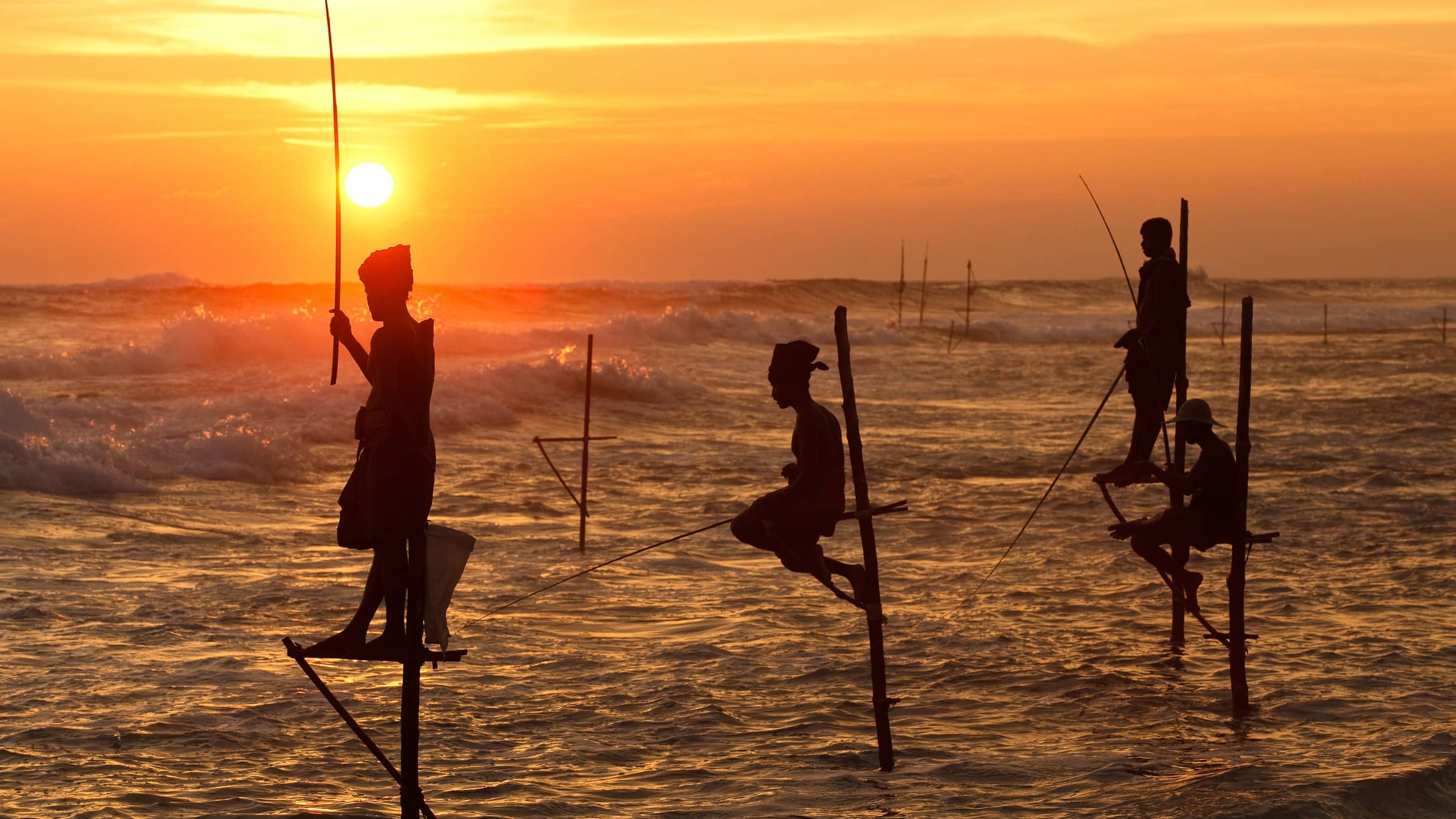
Galle to Tangalle, 2 to 3 hours from Colombo
The south coast
A hundred and fifty kilometres of beach, reef and river mouth, with a lived-in seventeenth century Dutch fort at the western end of it and blue whales offshore for half the year.
Best months December to March
- Galle Fort
- Dutch grid, Portuguese walls, occupied since 1663
- Whales off Mirissa
- November to April, blue and sperm
- Turtles at Rekawa
- Green turtles come ashore year round, most in April to July
- Colombo to Galle
- 125 km on the expressway, about 2 hours
Southeast and northwest, 4 to 5 hours from Colombo
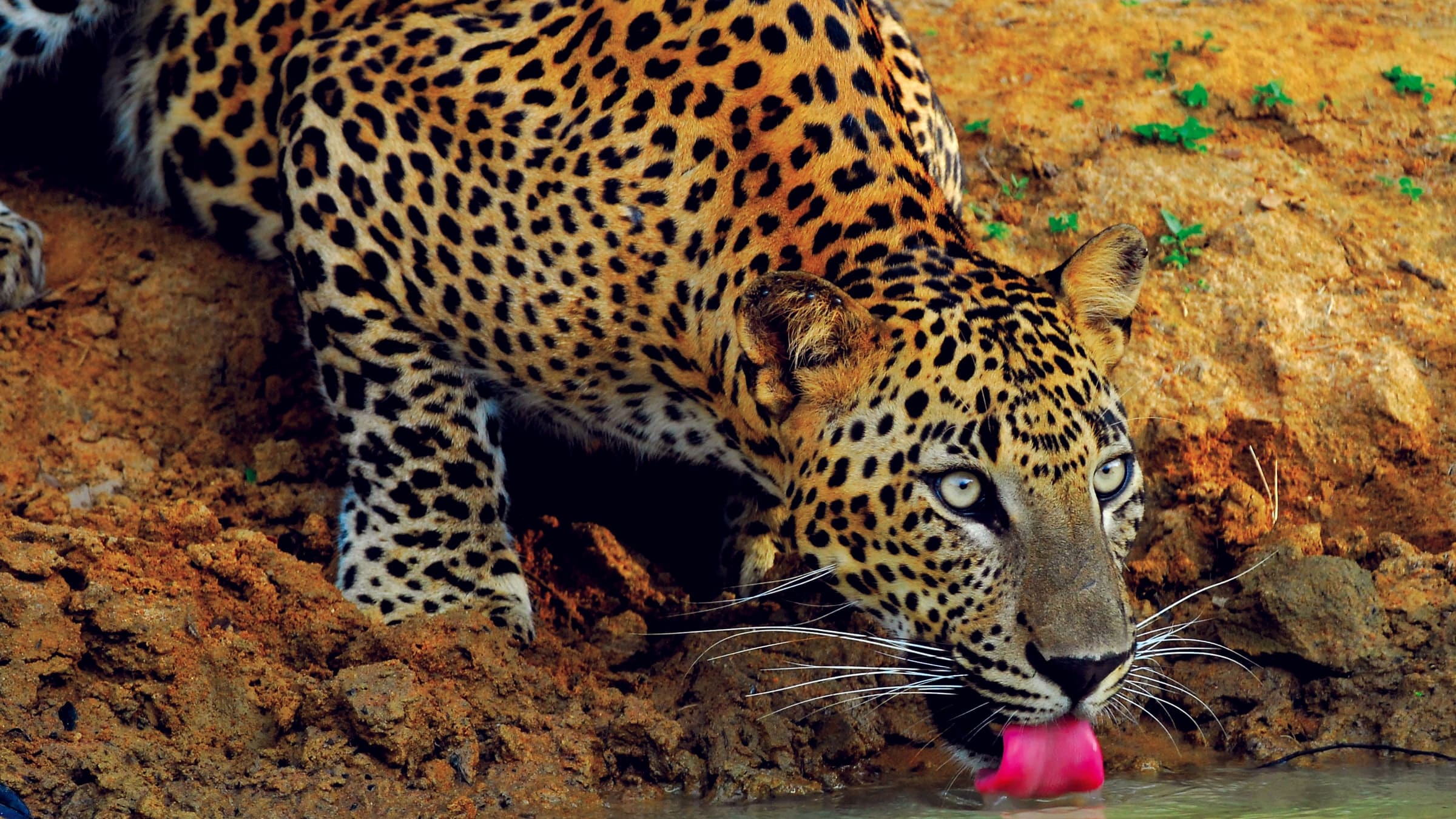
Yala and the dry-zone parks
Yala has one of the highest recorded leopard densities in the world, Wilpattu is twice the size and a fraction as busy, and Minneriya fills with elephants as the reservoir drops in the dry months.
Best months February to July
- Yala
- Busiest at the Palatupana gate. Block 1 is the crowded one
- Wilpattu
- Largest park in the country. Sand-rimmed lakes, few vehicles
- Minneriya and Kaudulla
- The dry-season gathering, roughly July to September
- Bundala
- A Ramsar wetland, and the better park for birds
Southwest interior, 4 hours from Colombo
Sinharaja and the wet zone
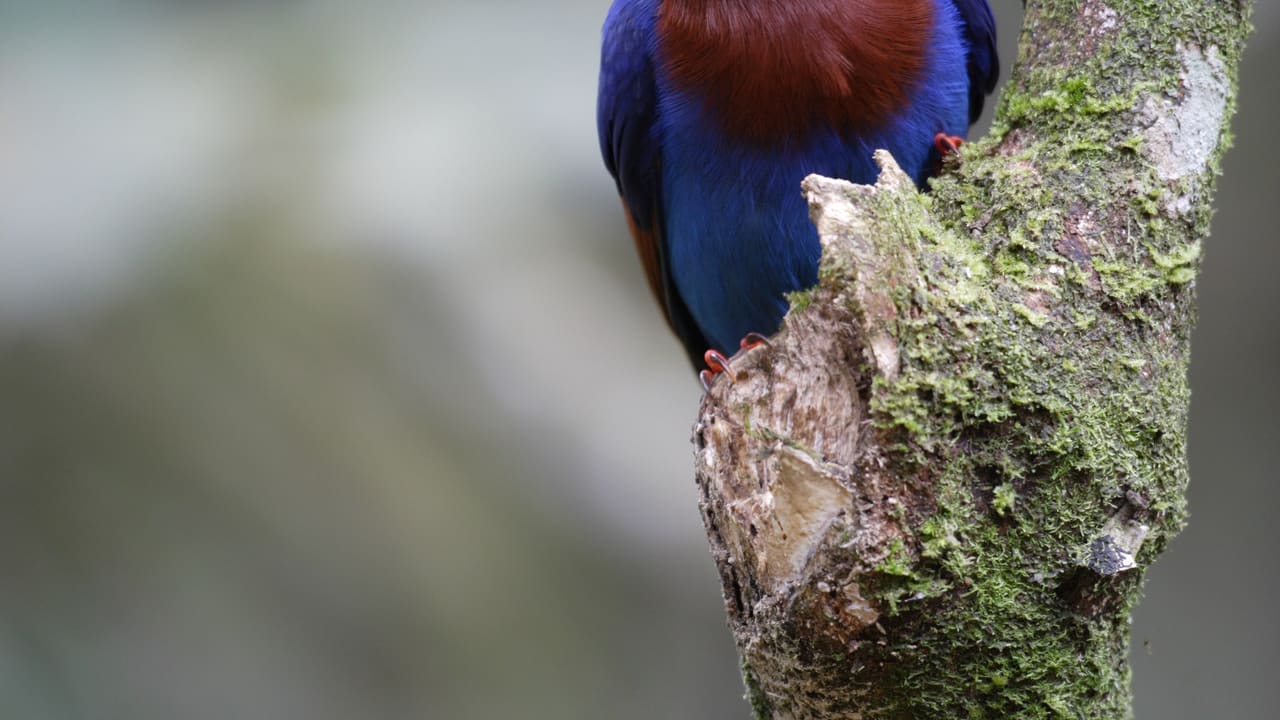
The last significant stand of primary lowland rainforest on the island, a World Heritage Site, and the place to find the birds that exist nowhere else. It rains most months, which is what a rainforest is.
Best months January to March, and August
- Status
- UNESCO World Heritage Site since 1988
- Endemic birds
- More than twenty of the island endemics are found here
- Access
- On foot, with a park guide. No vehicles inside
- Bring
- Leech socks. Not optional between May and September
West coast, 35 km from the airport
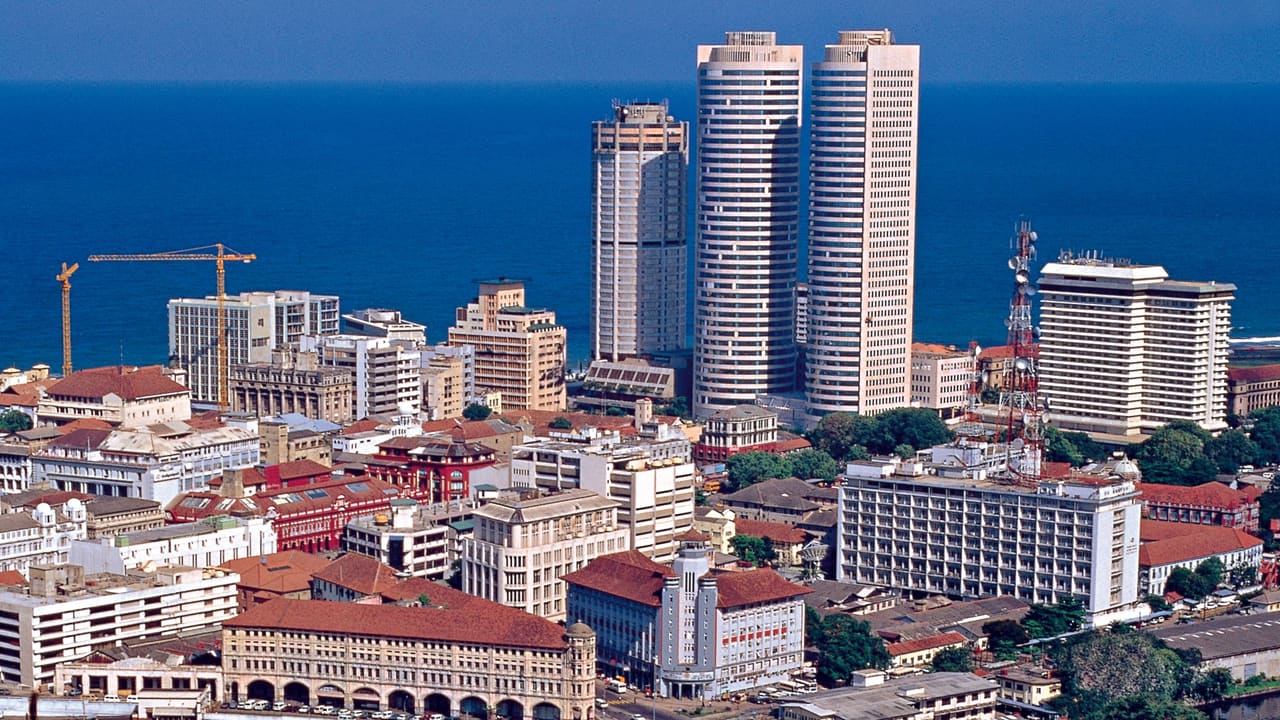
Colombo
Skipped by most itineraries and worth two nights. Pettah market, a Dutch hospital turned into a colonnade of restaurants, Sea Street, and the best food on the island by a distance.
Best months Any month. It is hot and humid throughout
- Pettah
- Go at seven. By ten it is very hot and very full
- Galle Face Green
- Kite flying and isso wade from five in the afternoon
- Getting around
- Metered tuk-tuk or a ride app. Insist on the meter
- Airport transfer
- About 45 minutes on the E03 expressway
Trincomalee, Batticaloa, Arugam Bay, Jaffna
The east and the north
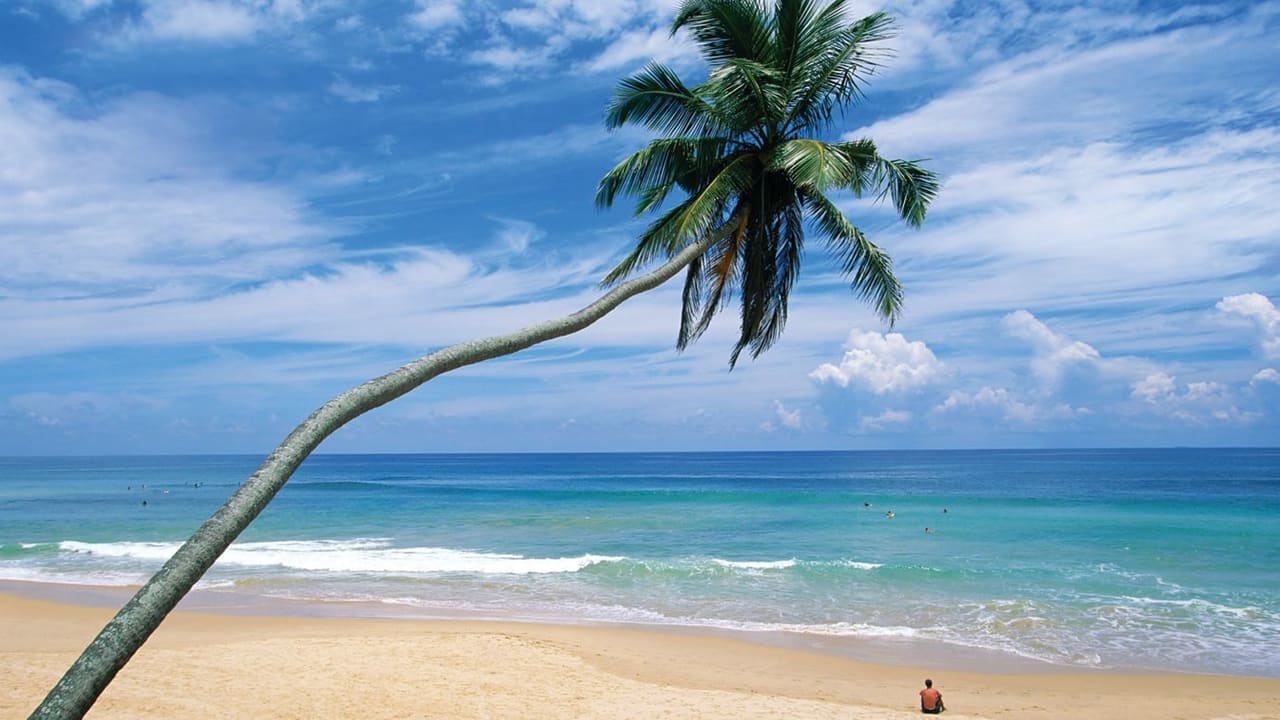
The half of the island that is good exactly when the south is not. Trincomalee has one of the finest natural harbours in the world, Arugam Bay has the best surf, and Jaffna is a different culture, a different cuisine and a different landscape.
Best months May to September
- Why it matters
- The monsoons are opposite. This coast is dry May to September
- Arugam Bay
- Surf season roughly May to October
- Jaffna
- About 400 km from Colombo. The train takes 6 to 7 hours
- Trincomalee
- Whales offshore in the same months as the surf
Not sure which of these fits your dates
Send us the weeks you can travel and we will tell you which coast is on the right side of the monsoon, and build the trip around that rather than around a wish list.